



My Sweet Bonanza Strategy After 500+ Sessions in Canada — What I Learned the Hard Way
Provider:
Pragmatic Play
Type:
Slot
Volatility:
High
RTP:
96.48%
Minimum Bet:
0.2
Maximum Bet:
125
Autoplay:
Yes
Release Date:
27.06.2019
Personal strategy guide | Author: [Name], Slot Review Specialist | April 2026 | 19+ only. I cannot promise wins — these are the habits and frameworks I use to make sessions better and more sustainable. I want to start with something I wish someone had told me clearly in my first week of playing Sweet Bonanza: no strategy changes the randomness of the outcomes. The RNG is certified, independent, and indifferent to any betting system. What strategy can do — and this is why I think it's still worth writing about — is change how sustainably players engage with the game, how well they understand what they're experiencing, and how much control they maintain over their own bankroll. After 500+ documented sessions across multiple Canadian operators, here is the framework I actually use.
Why I Think About RTP Differently Than Most Players
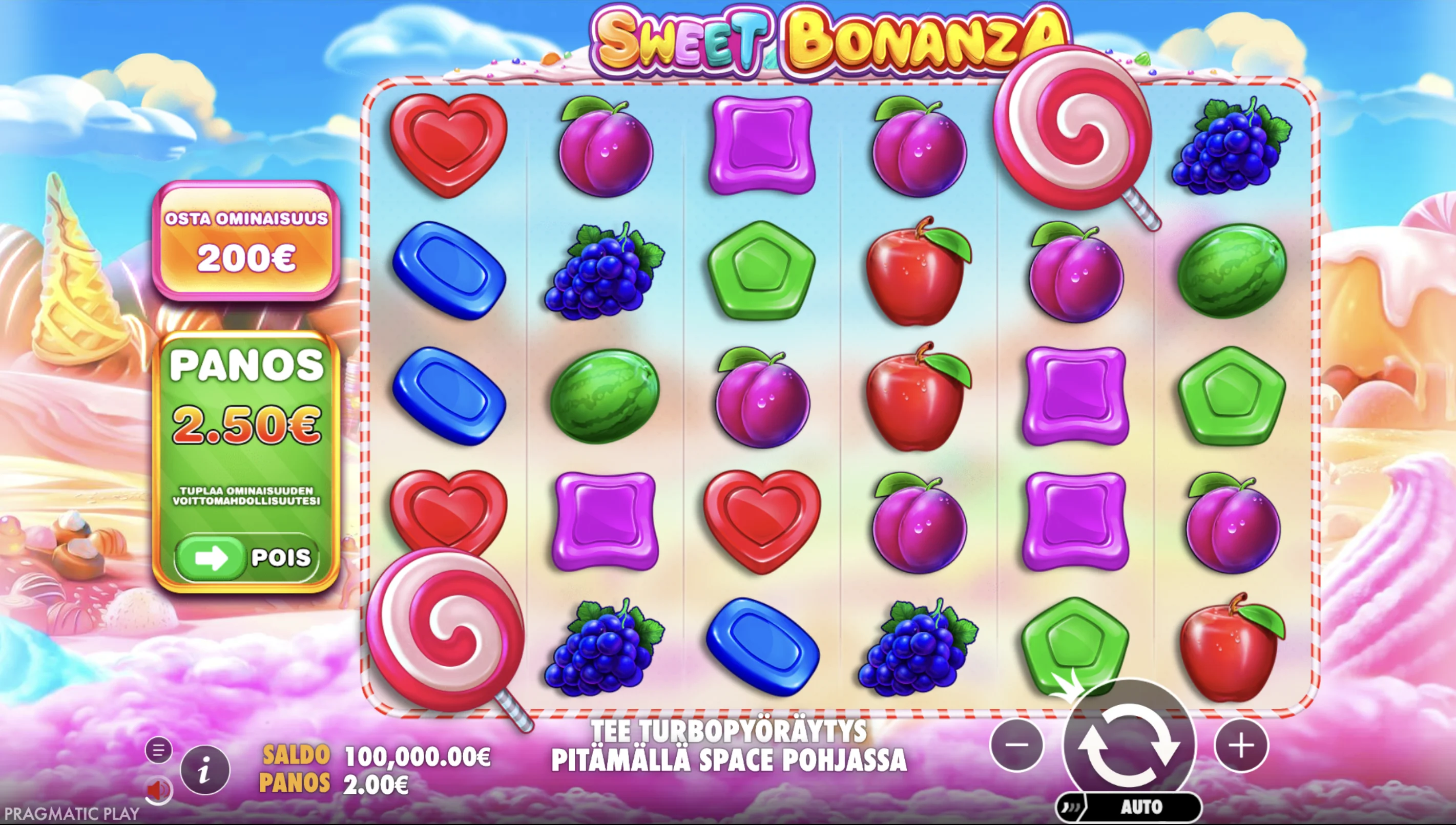
The 96.48% RTP gets cited constantly, but I've found most players misunderstand what it means for them personally. It's a statistical aggregate over millions of spins — my single session of 200 spins has essentially no relationship to that average. I've had sessions returning 300%+ of my stake. I've had sessions returning 20%. Both are completely consistent with a 96.48% RTP in a high-volatility game.
What the RTP actually tells me is the operator-side proposition over long timeframes. And the operator-configurability of RTP is something I take seriously in a way I didn't early on. Operators can set Sweet Bonanza as low as 89%. The difference between 96.48% and 89% is 7.48 percentage points of expected loss per unit wagered — that accumulates significantly in a multi-hour session. Now I always open the game information panel before my first paid spin. It takes 30 seconds. If I see 89%, I either change operators or accept I'm playing a materially different proposition.
The high-volatility classification is what shapes my session planning more than anything else. High volatility in practice means: I should expect to go 150+ spins sometimes without a free spins trigger. Not because something is wrong, not because the game is ""cold"" — because that's mathematically how high variance works. When I internalised this, my frustration with losing runs disappeared completely. I stopped experiencing variance as failure.
My Personal Bankroll Framework: The 1% Rule and How I Apply It in CAD
The principle I've built everything around is the 1% rule: each spin should cost no more than 1% of my session budget. I stick to this without exception.
Here's why: Sweet Bonanza's free spins feature — the place where the game's best outcomes live — triggers on average roughly every 100-150 base-game spins. If I want a realistic statistical chance of hitting free spins at least once during a session, I need at least 100 spins. The 1% rule guarantees exactly that minimum.
[TABLE: My Real Session Budget Planning — Canadian Dollars]
| My Budget | My Standard Stake | With Ante Bet | Minimum Spins | What I'm Chasing |
|---|---|---|---|---|
| C$20 | C$0.20 | C$0.25 | 100 | Low stakes — learning sessions |
| C$50 | C$0.50 | C$0.63 | 100 | Regular casual session |
| C$100 | C$1.00 | C$1.25 | 100 | My most common session |
| C$200 | C$2.00 | C$2.50 | 100 | Extended session with room |
| C$500 | C$5.00 | C$6.25 | 100 | High-variance session |
The C$100 / C$1 stake combination is where I spend most of my time. It feels like the right balance between meaningful win potential (max win 21,175×) and a session length that gives me genuine statistical exposure to the game's variance.
The Ante Bet Decision: When I Use It and When I Don't
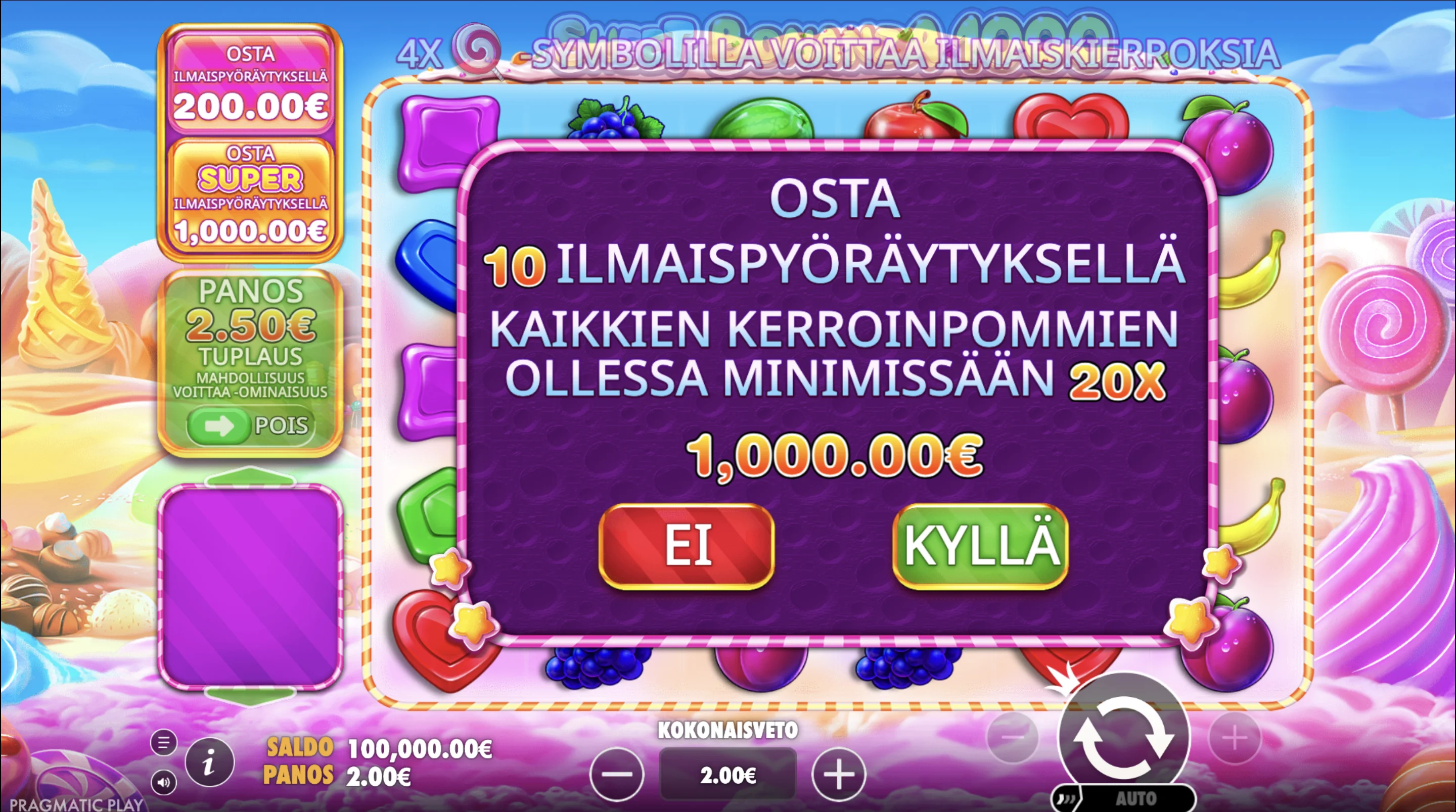
I use the Ante Bet in probably 40% of my sessions. Here's my decision rule: if my session budget is 200× my intended stake or more, I activate it. If it's less than 200×, I keep it off.
The reasoning: the Ante Bet costs 25% more per spin and doubles scatter frequency. To actually benefit from doubled scatter frequency, I need enough spins for that benefit to materialise statistically. A session of 40 spins won't show me the difference between standard and doubled scatter frequency — it's too small a sample. A session of 160+ spins will.
In practical terms at C$1 stake: C$200 budget gives me 160 spins with Ante Bet (C$200 ÷ C$1.25). That's enough to experience the difference. C$100 budget gives me only 80 spins with Ante Bet — below my 100-spin minimum, so I leave it off and use the standard C$1 stake for 100 spins.
One thing I do that I haven't seen others mention: when I activate Ante Bet, I slightly reduce my base stake to maintain the 100-spin minimum. If my 1% rule points to C$1 standard, I drop to C$0.80 with Ante Bet active (C$1.00 total including the 25% premium). Same session length, more scatter appearances. This small adjustment makes the Ante Bet viable at budgets where straight application would cut sessions too short.
Bonus Buy: My Honest Experience and the Ontario Reality
I've bought the Bonus Buy (100× stake for immediate free spins) many times in testing at operators outside Ontario. My documented results span from 8× stake return (a brutal round) to 614× stake return (a genuinely memorable session). The variance inside the feature is real — purchasing the bonus does not guarantee a favourable round.
For my Ontario sessions, Bonus Buy is simply not an option. The AGCO requires all iGaming Ontario-licensed operators to disable it. When I'm playing at Jackpot City or another AGCO-regulated casino in Ontario, the button is greyed out. This is a regulatory requirement, not a technical issue. Players outside Ontario playing at Kahnawake or MGA-licensed operators will still see it available.
My honest assessment of Bonus Buy when it is available: I recommend it only when the session budget is at least 300× stake. At C$1 stake, that means a C$300+ session budget — ensuring that a single unlucky Bonus Buy round doesn't end the session immediately. Below that threshold, the variance risk relative to budget is too concentrated in a single event.
The Multiplier Bomb Truth: What I Got Wrong Initially
I spent my first few free spins sessions misunderstanding the multiplier bomb mechanic, and it coloured my expectations in ways I had to consciously correct.
What I thought: when two bombs appear with values 60× and 40×, they multiply each other to give 2,400×.
What's actually true: they add together to give 100×.
When I realised this — about a month into playing — I had to recalibrate everything. The good news: 100× applied to a meaningful cluster win is still extraordinary. The mechanics are powerful even under the summation model. What changed was my disappointment when ""only"" an 80× combined multiplier appeared. Once I understood the correct model, 80× became genuinely exciting rather than a let-down.
[LIST: What I watch for during free spins to get the most from the feature]
- Additional scatters during the feature. Three or more extra scatters during free spins add five more spins. Extended rounds are where the biggest outcomes come — I'm always hoping for those extra triggers.
- A single high-value bomb combined with a strong cluster. I've had sessions where one 100× bomb with a Heart Candy cluster produced a more memorable outcome than five small bombs.
- Long tumble chains during free spins. Bombs survive through tumble chains. A bomb that lands at the start of a multi-tumble sequence is applied after all tumbles resolve — meaning it multiplies the accumulated win from the whole chain.
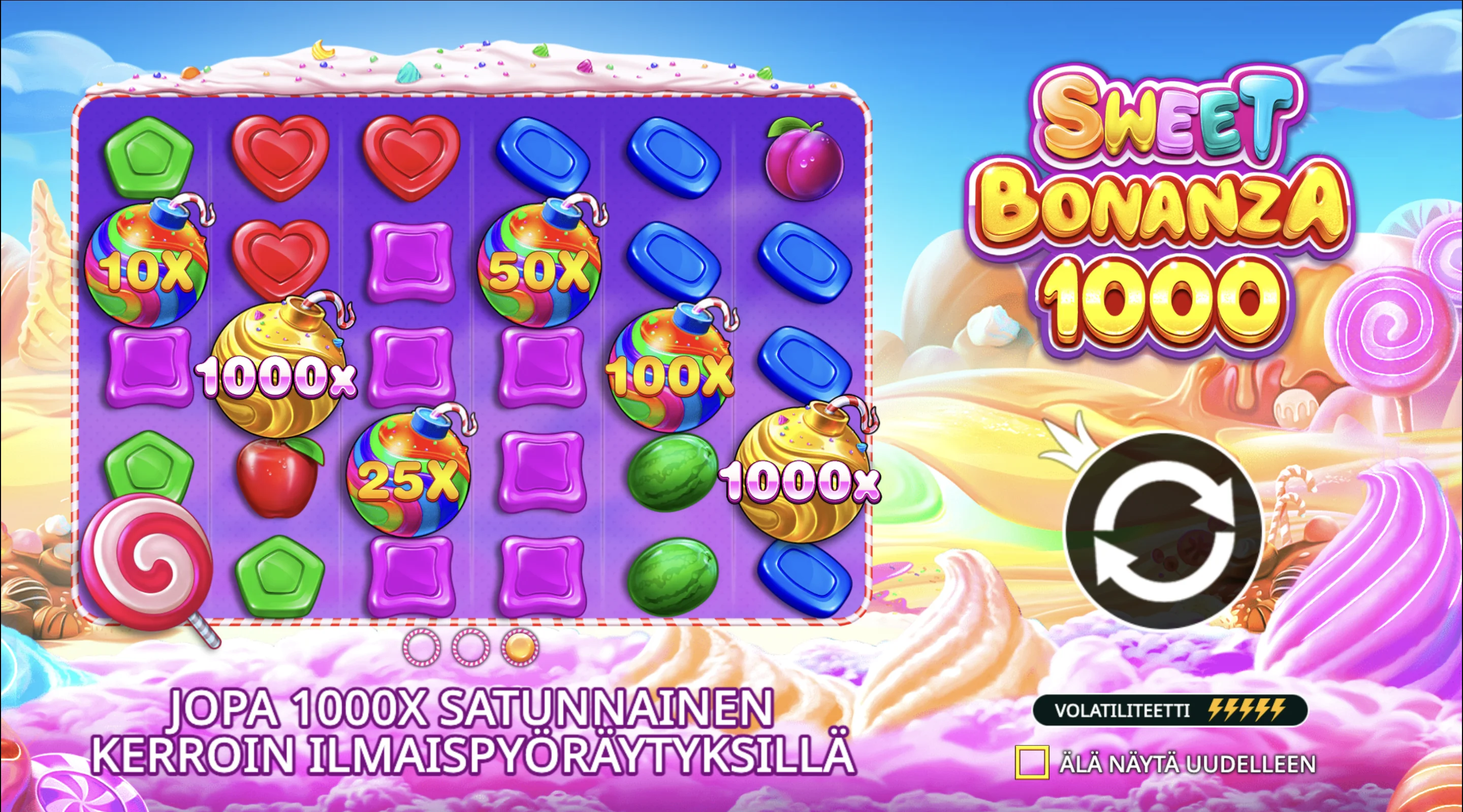
- In Sweet Bonanza 1000 sessions, recalibrate completely. The 1,000× individual bomb ceiling in 1000 changes the tail distribution dramatically. I've seen single bombs at 800× produce outcomes that simply aren't achievable in the original. It's a meaningfully different game in the feature rounds.
The Habits I've Built That I Won't Play Without
I set the session loss limit before I deposit, not after. I decide exactly how much I'm willing to lose — not ""around"" an amount, but a specific number — and I treat that as permanently spent the moment I transfer it to the casino. Anything that comes back is a positive. This framing sounds simple, but it has completely eliminated loss-chasing behaviour from my sessions.
I never adjust stake upward based on recent results. I've played enough Sweet Bonanza to know that a 30-spin losing run tells me nothing about the 31st spin. The RNG has no memory. Doubling stakes after losses is the most common way I see players convert a planned C$100 session into a C$400 session with nothing to show for it.
I use platform deposit limits as a backup to my own discipline. At AGCO-licensed casinos, I set a weekly deposit limit equal to my planned gambling budget for the week. It costs nothing to set up and functions as a failsafe if I'm ever tempted to deviate from my pre-commitment.
I always check the RTP before paying for a spin. 30 seconds, every single operator, every single time. The difference between 96.48% and 91% is not something I want to discover after 500 spins.
I take breaks in sessions longer than 90 minutes. Not because of any superstition about the game ""resetting"" — it doesn't. But my own decision quality declines after extended focus, and good bankroll discipline requires clear thinking.